How to Apply for Permitted Development Rights for a Loft Conversion in the UK
Applying permitted development rules to a loft conversion can feel deceptively straightforward. On paper, the system is designed to allow homeowners to improve their properties without unnecessary bureaucracy. In practice, the outcome often depends on understanding where flexibility ends and legal limits begin. Loft conversions sit precisely at that boundary, particularly when roof alterations and roof windows are involved.
For many households, the appeal of permitted development lies in speed and certainty. Avoiding a full planning application can reduce delays and simplify the process, but only if the project complies fully with the relevant conditions. Understanding how permitted development rules apply to loft conversions is therefore essential before finalising any design decisions or beginning work.
What Is Permitted Development (PD) for Loft Conversions?
Permitted development (PD) is a set of national planning rights that allows certain building works to proceed without the need for formal planning permission. In the context of loft conversions, PD typically covers internal reconfiguration and limited external roof alterations, provided they remain within defined limits.
However, not all properties benefit from these rights. Permitted development applies to houses, but not to flats or maisonettes, and it may be removed by local authorities through specific planning controls. Even where PD rights exist, the rules are precise. A loft conversion that exceeds just one condition, even marginally, may fall outside permitted development and require a full planning application.
Determining whether a proposed conversion qualifies is therefore less about intention and more about technical compliance.
The “Golden Rules”: Key Limits and Conditions
Permitted development for loft conversions is governed by a series of conditions designed to control scale, appearance and impact on neighbouring properties. These rules apply collectively, not selectively.
Volume Limits: The 40m³ vs 50m³ Rule
The most widely recognised restriction relates to volume. For terraced houses, the maximum additional roof space allowed under permitted development is 40 cubic metres. For semi-detached and detached houses, the limit increases to 50 cubic metres.
These allowances include all roof enlargements added since the property was originally built. Previous extensions, even those completed decades ago, count towards the total. Misunderstanding this point is one of the most common reasons loft conversion projects fall outside permitted development.
Height and Aesthetic Constraints
Under PD rules, the conversion must not exceed the height of the existing roof ridge. Externally, materials should closely match the appearance of the original house. This does not require exact replication, but it does mean maintaining visual continuity.
Side-facing elements are treated more cautiously. Where windows are introduced on side elevations, obscure glazing is typically required, and the openings must be fixed shut unless positioned above the specified minimum height.
Roof Windows and Skylights: Specific Regulations
Roof windows are often permitted under PD, but only when they meet strict criteria. They must not project beyond the plane of the existing roof slope facing the highway. In practical terms, this means low-profile or flush-fitting designs are usually necessary.
This is also where energy-efficient roof windows become particularly relevant. Modern glazing technology allows strong thermal performance without adding unnecessary bulk, helping designs remain compliant while maintaining interior comfort.
Careful specification at this stage can prevent complications later, particularly where roof alterations are visible from public viewpoints.
Do I Need to Apply for Anything? The Lawful Development Certificate (LDC)
Even when a loft conversion meets all permitted development conditions, many homeowners choose to apply for a Lawful Development Certificate (LDC) for added reassurance.
An LDC does not grant permission in the traditional sense. Instead, it formally confirms that the proposed (or completed) work falls within permitted development rights and is therefore lawful.
Although not compulsory, the certificate provides valuable certainty. It is particularly useful when selling a property, as it helps prevent delays, solicitor queries and uncertainty for future buyers. Fees vary between local authorities, but they are generally modest compared with the long-term security the certificate provides.
When Permitted Development Does Not Apply
There are clear circumstances where permitted development rights do not apply at all.
Listed buildings are excluded entirely. Properties located in conservation areas, National Parks or Areas of Outstanding Natural Beauty may also face restrictions, particularly where roof alterations are visible from public viewpoints.
In addition, some properties have had their permitted development rights removed through Article 4 Directions or historic planning conditions. In such cases, even modest loft alterations may require full planning permission.
Understanding these limitations at the outset helps avoid investing time in designs that later prove unworkable. Where PD rights do not apply, planning requirements become more site-specific and should be discussed with the local authority at an early stage.
Beyond Planning: Building Regulations and Energy Efficiency
Permitted development relates only to planning control. All loft conversions, regardless of planning status, must comply with Building Regulations.
These cover structural integrity, fire safety, insulation, ventilation and energy efficiency. Loft spaces are particularly sensitive to heat loss, so thermal performance must be carefully considered. Roof windows form part of the building envelope and should be specified alongside insulation continuity and ventilation strategy.
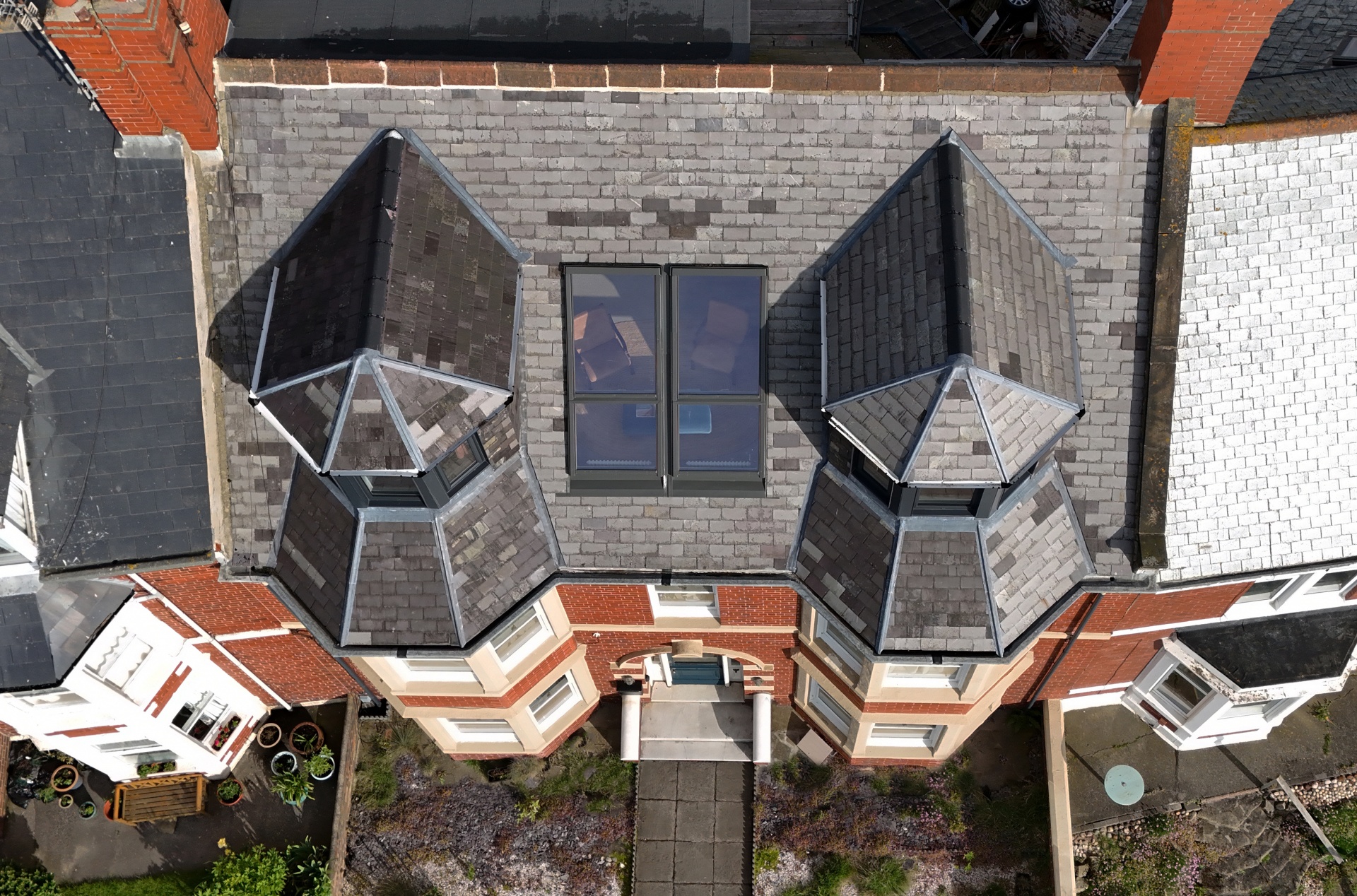
Modern roof window solutions make it possible to improve energy efficiency without significantly altering the roof’s external appearance. This is an important consideration where visual impact is sensitive.
FAQ: Common Questions About Loft Conversions and Planning
Do I need planning permission for a loft conversion?
Not always. Many loft conversions fall within permitted development rights, provided all limits and conditions are satisfied.
Do roof windows need planning permission?
In most standard cases, no. However, planning permission may be required in protected areas or where projections exceed permitted limits.
Is permitted development automatic?
No. Compliance must be demonstrated. Applying for a Lawful Development Certificate provides formal confirmation.
Can permitted development rights be removed?
Yes. Article 4 Directions and previous planning decisions can remove PD rights entirely.